
HikingBudget
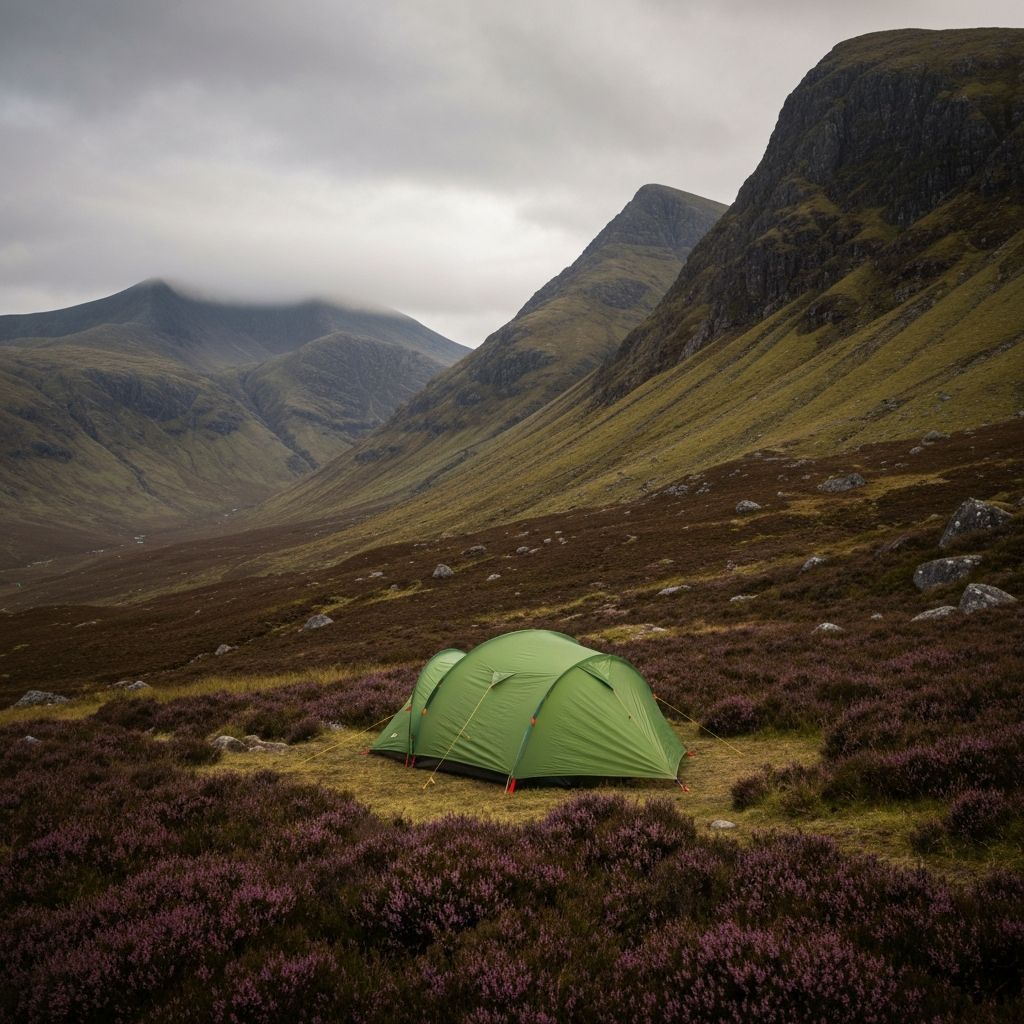
Wild Camping in Scottish Highlands
October 2025
Your legal right to roam: a practical guide to wild camping in Scotland, from gear to etiquette.
Scotland's right to roam makes it one of the best places in the world for wild camping. This guide covers the legal framework, best locations, essential gear, and the unwritten rules that keep this freedom alive.
The Law: Scottish Outdoor Access Code
Wild camping is legal in Scotland under the Land Reform (Scotland) Act 2003, with conditions:
- Allowed: Open moorland, hills, forests, most loch shores
- Not allowed: Enclosed farmland, near buildings, in some Loch Lomond zones (March-September)
- Always: Camp away from roads and buildings, small groups, 1-2 nights max per spot
Best Locations
Highlands
- Glen Etive: Wild river camping, road access
- Torridon: Dramatic peaks, excellent wild spots
- Knoydart: True wilderness, boat or long walk in
Islands
- Isle of Skye: Fairy Pools area, Quiraing
- Isle of Mull: Calgary Bay, Ben More
- Harris: Beaches, few people
Southern Scotland
- Galloway Forest Park: Dark sky reserve
- Trossachs: Accessible from Glasgow/Edinburgh
Essential Gear
- 3-season tent (wind-rated!)
- -5°C sleeping bag minimum
- Insulated sleeping pad (R-value 4+)
- Waterproof layers (it will rain)
- Midge net/repellent (May-September)
- Trowel for Leave No Trace
- Stove and fuel (no open fires)
- Water filter
Leave No Trace Principles
| Do | Don't |
|---|---|
| Pack out all rubbish | Leave any trace you were there |
| Use a trowel, 50m from water | Use soap in lochs/streams |
| Arrive late, leave early | Camp in same spot repeatedly |
| Keep groups small (3-4 max) | Make noise after dark |